problem
Buying or selling a car in Nigeria usually means scattered listings and chat threads. It is hard to tell who is a real dealer, whether a price is fair, and whether it is safe to pay. And cars are only half of it. People also need rentals, a mechanic, a car wash, parts or a loan.
Sax AutoTrading is one marketplace for all of that. It has to work for very different people: a buyer who wants to look around, a private seller with one car, a dealer running a showroom, and a rental or service business.
my role
I designed the mobile app in Figma and helped build it. The same server also runs the admin dashboard and the website. Nigeria is the first market, and the app is built to grow across Africa.
what I did
Open to everyone, sign in only when it matters
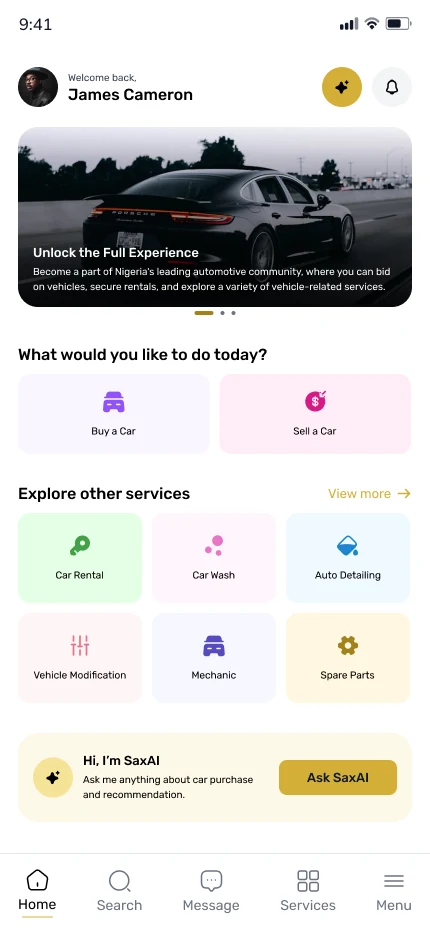
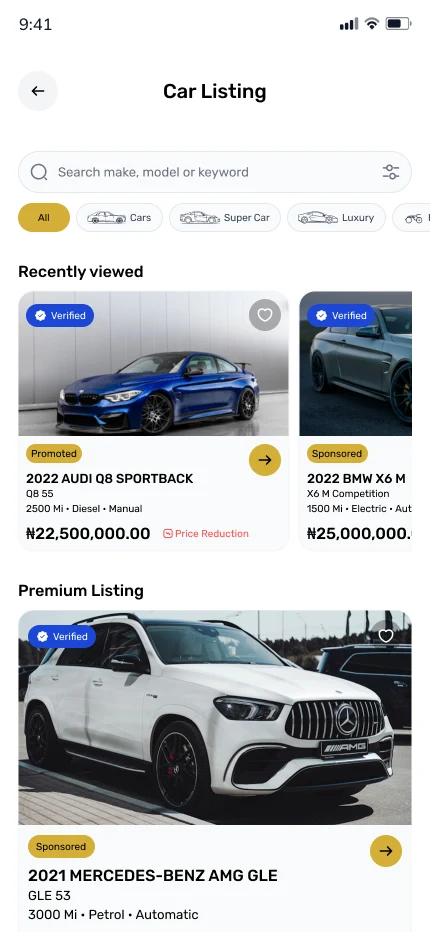
A first-time visitor can tap Continue as Buyer and land straight on the home screen. Browsing, searching, car details, dealers, reviews and the finance calculator all work without an account. Sign-in only appears when someone tries to do something that needs it, like saving a car, messaging a dealer or making an offer.
The home screen is built around the two things people come to do, Buy a Car and Sell a Car. The other services are one tap away.
Tools for the people who sell
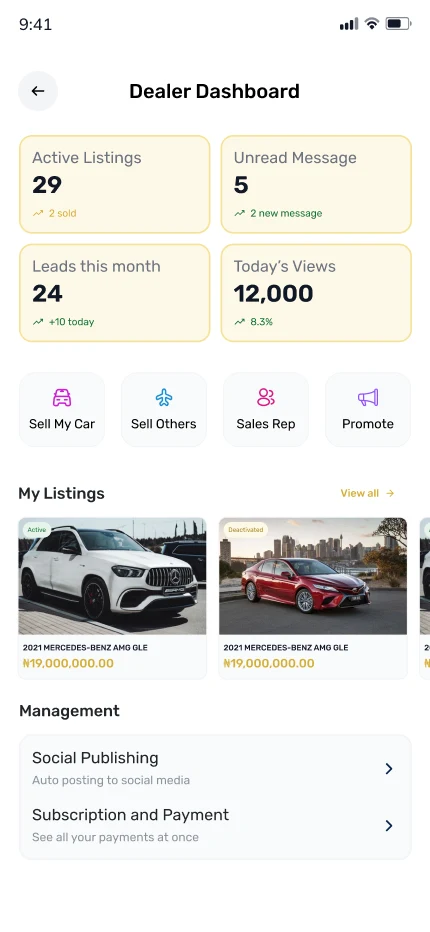
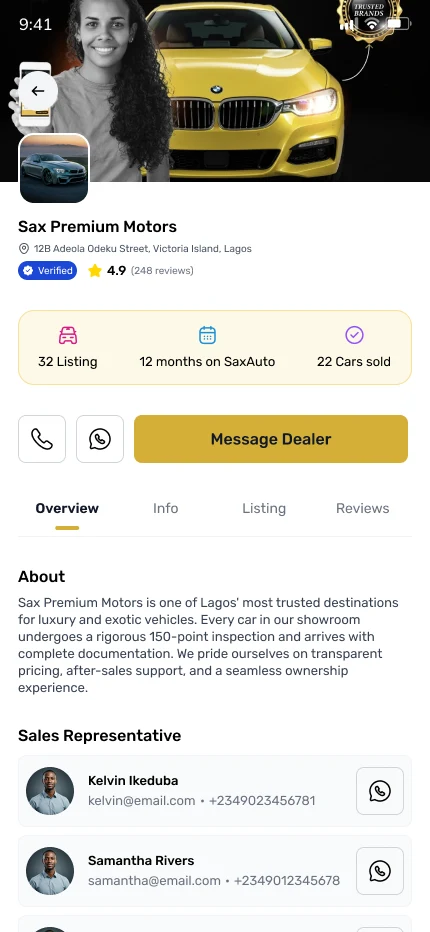
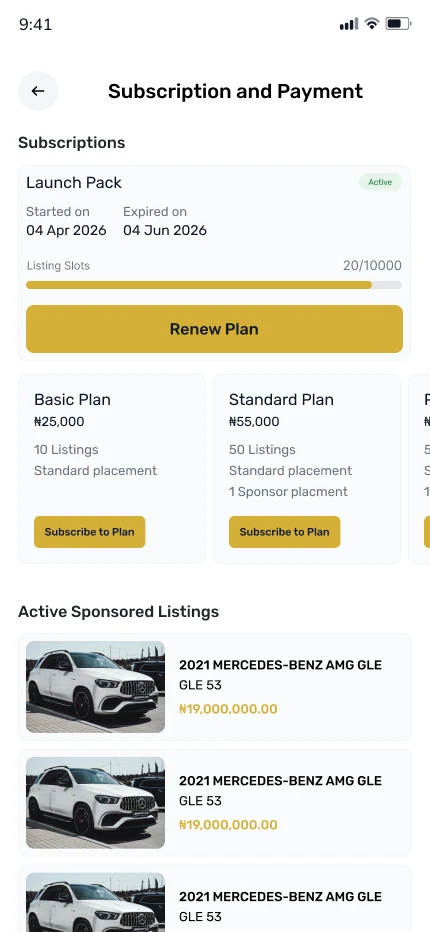
Dealers use the app the most, so they get their own home screen. At the top it shows active listings, unread messages, new enquiries this month and today's views. Below are quick actions to sell, promote or manage listings. A dealer's public profile shows a verified badge, rating, reviews and the sales team. Dealers manage their plan and promoted listings in the app, not by email.
Private sellers are different on purpose. They prove who they are and that they own the car, but they don't get a public dealer profile.
Help people trust the price
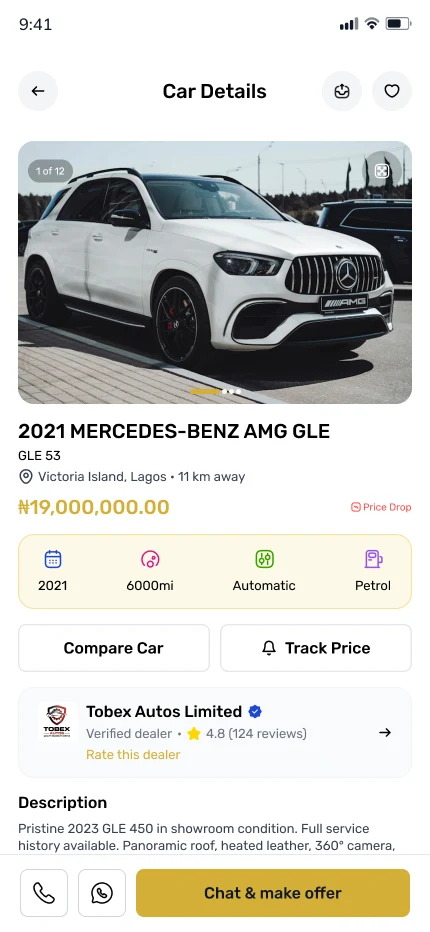
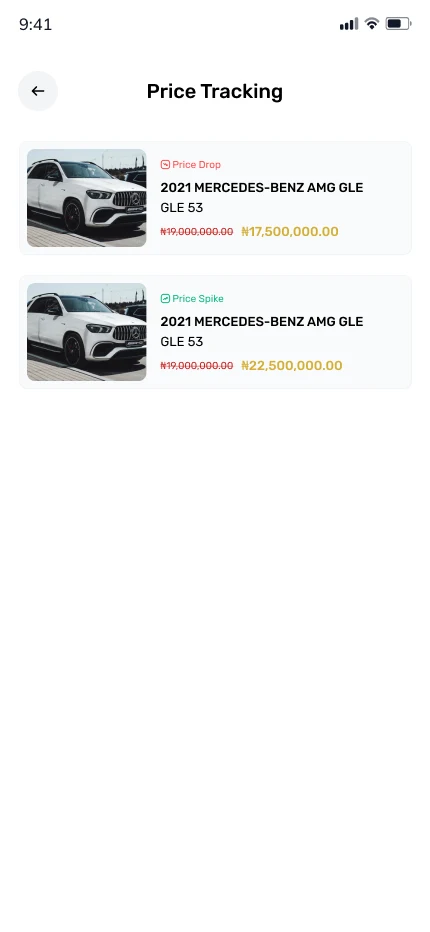
Money is the scary part, so the app puts proof next to the price. A car's page shows a verified dealer with reviews, a price-drop tag, Compare and Track price. Further down, a buyer can book an independent inspection and protect a purchase until the car is delivered and checked.
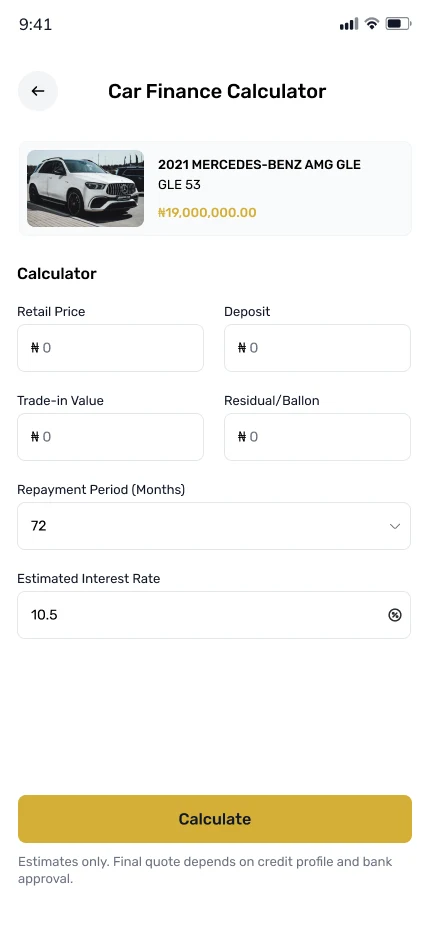
Buyers can follow a car's price and get an alert when it changes. A loan calculator shows a monthly payment, and says clearly that it is an estimate, not an offer.
Safe accounts, and an easy way out
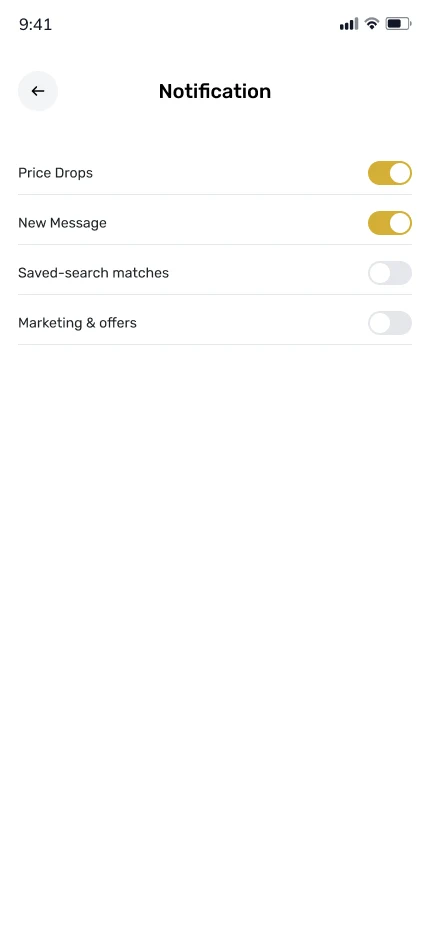
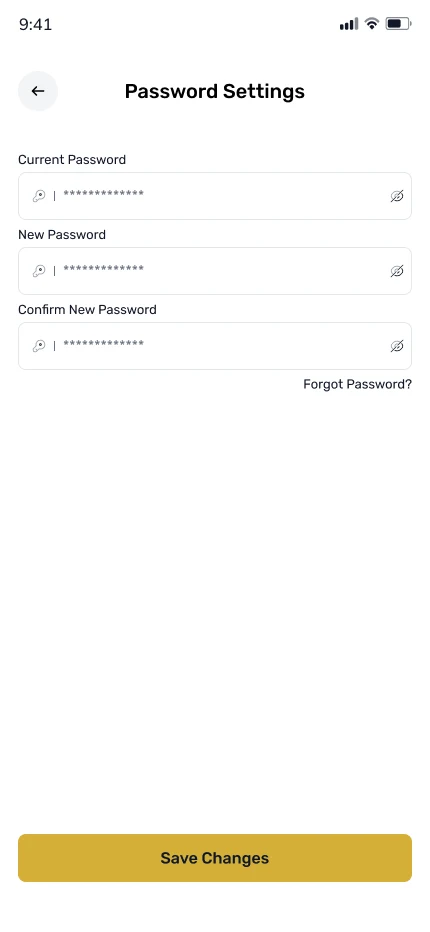
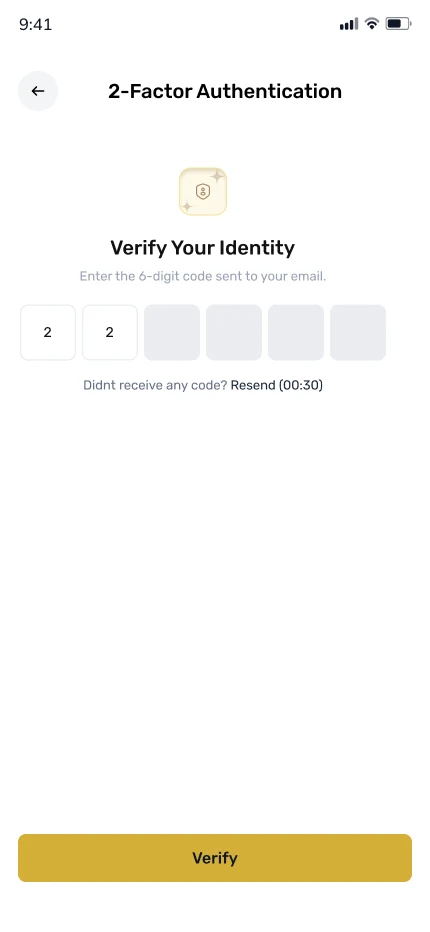
Password changes and a second sign-in step (a code sent to the user) are in one place. Anyone can also delete their account from inside the app, for all four account types, as the app stores require. Access stops straight away. Records tied to money are kept, as the law and fairness require, and personal details are erased.
under the hood
- The app is built with Flutter, so one codebase runs on Android and iPhone. It uses Firebase for notifications, and one design system is shared by every screen and role. Light and dark themes both ship.
- The server is built with Node and Express on a MySQL database, with Cloudinary storing the photos. The app, the admin dashboard and the website all use it.
- The admin dashboard is being rebuilt in Next.js to replace the first version.
- Testing: more than 1,600 automated tests on the app and about 1,900 on the server pass before each release. Account deletion was also tried on a real database using made-up data.
outcome
Version 1 is live on Google Play, and the iPhone version is coming soon to the App Store. It is too new for real usage numbers.
lessons
Give each type of user their own starting point. One app with four kinds of users only feels simple if everyone lands on the right home screen and never sees the others' tools.
App store rules arrive late and touch everything. Account deletion looked like one screen. It turned out to reach the app, the server, payments and email. Next time I would plan it from the start.