problem
Paying bills in Nigeria means jumping between apps: one for airtime, another for electricity, another for betting, another for flights, and a separate way to get a dollar card. Each has its own sign-up and its own way of asking for money, and people are wary of putting money into apps they don't trust.
eLoaded is a fintech product for web and mobile that brings these into one place. The design had to solve four things:
- Many services, one app. It had to fit very different services, from phone networks and electricity to betting, flights and financial tools, without overwhelming anyone.
- Two currencies. Moving money between naira and dollars, mostly to fund a virtual dollar card, had to be clear and safe.
- Trust. Every screen involves money, in a market where people are careful about online payments.
- Reliability. Many services depend on other companies' systems, so the app has to give clear, real-time feedback about what is happening.
my role
I designed the eLoaded experience for web and mobile: how services are organised, how every transaction flows, and the dollar card and swap screens. This was a design project for eLoaded Nigeria in 2024, and it took about two months.
what I did
A home that shows the money first, then the services
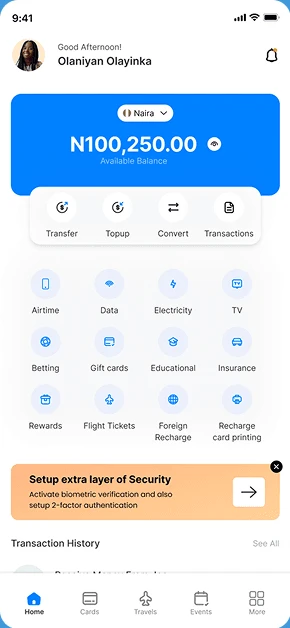
The home screen opens with the balance in naira and four everyday actions: Transfer, Top up, Convert and Transactions. Below them, services are grouped in a grid: airtime, data, electricity, TV, betting, gift cards, education, insurance, rewards, flight tickets, foreign recharge and card printing. Someone looking for one thing finds it without scrolling through the others. A card near the bottom nudges people to turn on biometrics and two-step sign-in.
The same steps for every service
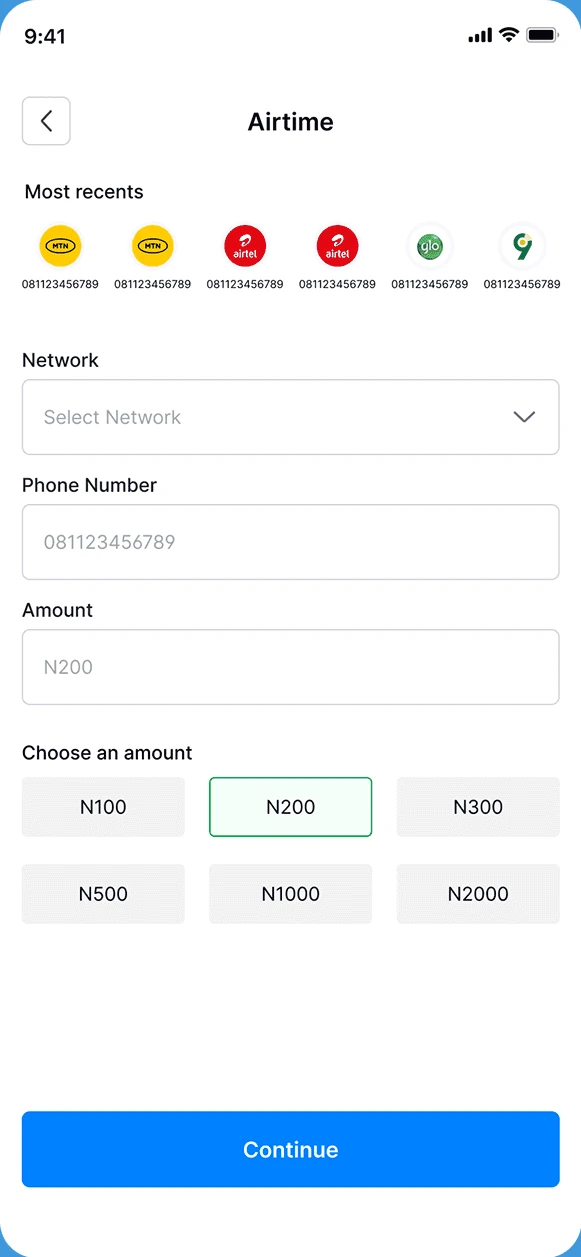
Whether someone buys airtime, pays a bill or books a flight, the steps are the same: choose the service, enter the details, review, confirm. Using one pattern everywhere means people learn it once. In the airtime flow, recent numbers sit at the top so a repeat top-up is two taps, and fixed amounts sit beside a free field so nobody has to type what they usually buy.
Flights, from search to ticket
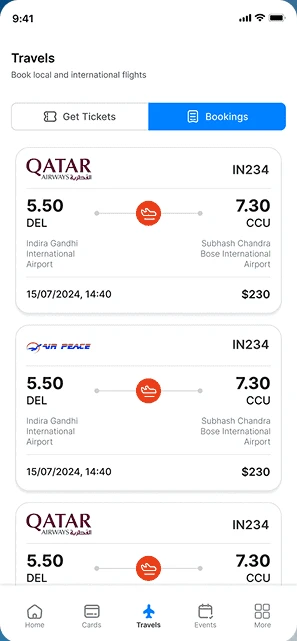
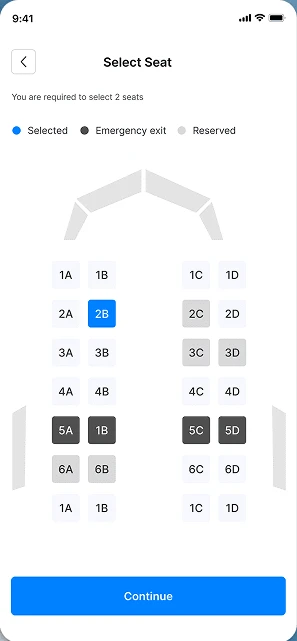
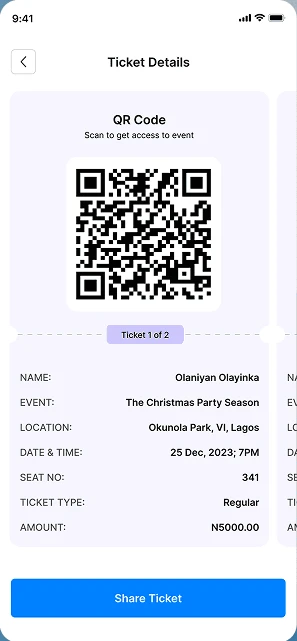
Travel gets the same treatment. The flights screen shows bookings and a way to get tickets, with airline, times, airports and price on each card. Seat selection uses a plan of the plane with clear colours for selected, reserved and emergency exit seats. The ticket ends in a QR code and the passenger's details.
Two currencies, made calm
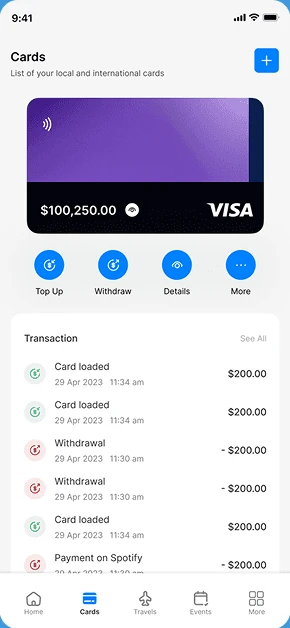
Funding a virtual dollar card means moving naira into dollars. I kept balances easy to see, made the exchange rate easy to find, and designed extra verification for the moment money moves. The card screen shows the card, Top up, Withdraw and Details one tap away, and a list of what it has been used for.
outcome
This was a design project. The web and mobile designs are complete, and the product has not launched.
lessons
When a product does many things, repeat one pattern. The more services an app covers, the more it pays to have the same four steps everywhere.
Slow down at the moment of risk. Most screens are quick on purpose. The currency swap and the card get extra clarity because that is where people worry about their money.