problem
Many people in Nigeria avoid interest-based loans, but they still need things: a fridge, a generator, furniture, a car. The options they find tend to hide what they will really pay until the last step, and it is hard to tell which plans are honest.
Amaanah Marketplace is a halal, interest-free way to buy appliances, electronics, furniture and vehicles in instalments. A customer chooses an item, sets a deposit and a repayment period, and sees the exact monthly payment before applying. The item is sold at a profit that is fixed and shown upfront, not as a loan with interest.
my role
I handled the design for Amaanah Marketplace: the website, the web app, the admin dashboard and the mobile app.
what I did
A landing page that makes one promise
The home page says it plainly: Shop and drive, the halal way. It offers two doors, HomeFlex for appliances, furniture and electronics, and FlexiWheels for vehicles, then explains the four steps from browsing to owning. In the middle is a calculator with sliders for the deposit and the repayment period, from 12 to 60 months. The monthly payment updates as you move them, with the financed amount, the profit and the total shown beside it, so nobody has to wait until the last page to learn the real number.
A mobile app that starts with what you need
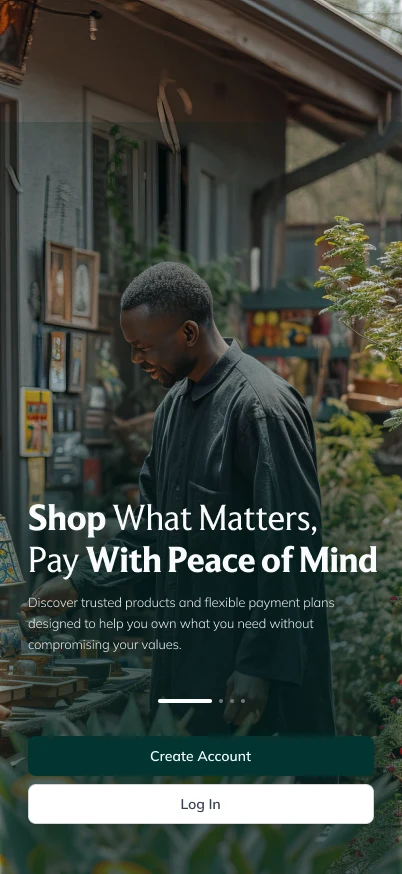
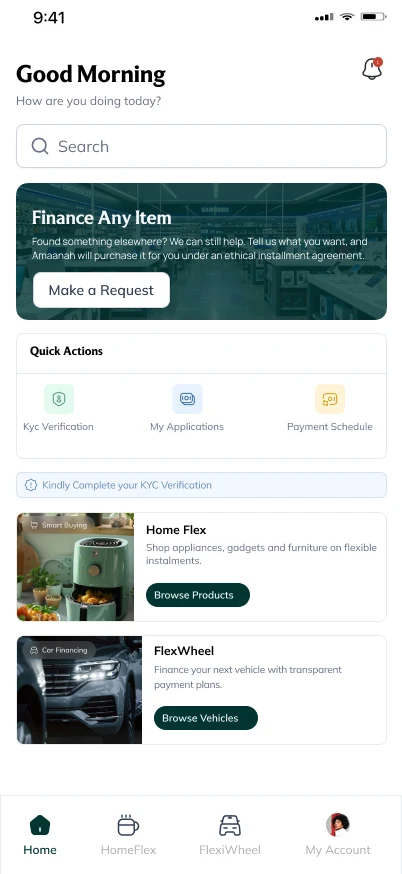
On a phone, the app opens with a short welcome and sign-in, then a home screen built around one question: what would you like to finance? Customers can browse Home Flex and FlexiWheel items, or tap Finance Any Item and make a request for something they don't see. Three quick actions sit above the lists: verify your identity, check your applications, and see your payment schedule. A note reminds new customers to finish verification.
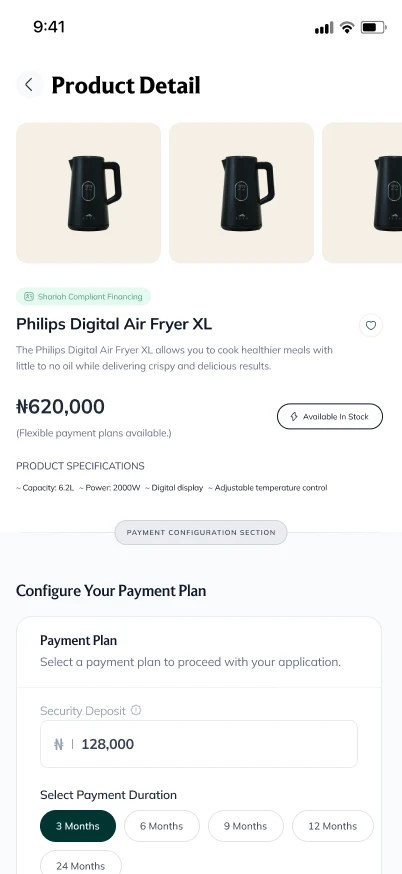
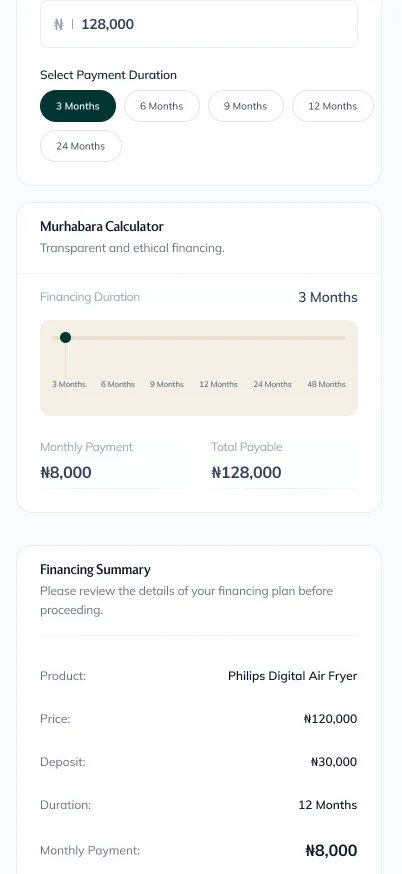
A product page shows photos, a description and the specifications that matter. Below them, the customer sets up the payment plan right there: a deposit, then a repayment period, with the monthly payment and the total payable shown before they apply.
Verification in three steps
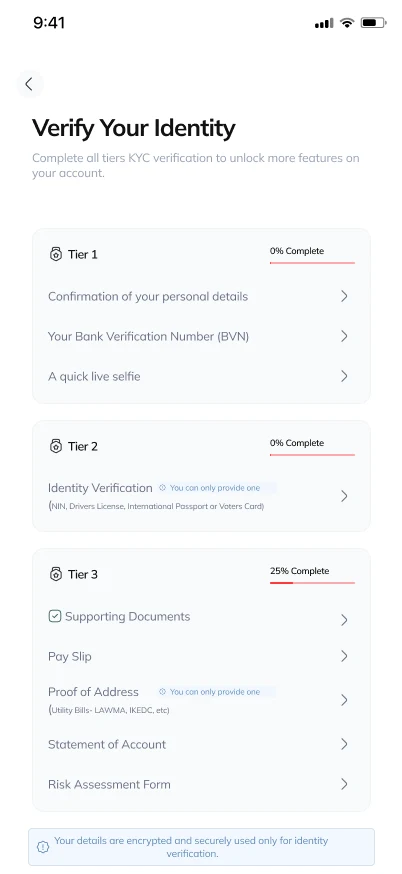
Customers have to prove who they are before they can finance anything, and that can feel like a wall. So verification is split into three tiers. The first confirms personal details, the second checks an identity document, and the third collects supporting documents such as a pay slip and proof of address. A progress percentage on each tier shows how far along someone is, and finishing a tier unlocks more of the account. People can get started early and share more as they go.
A financing application that moves in four steps
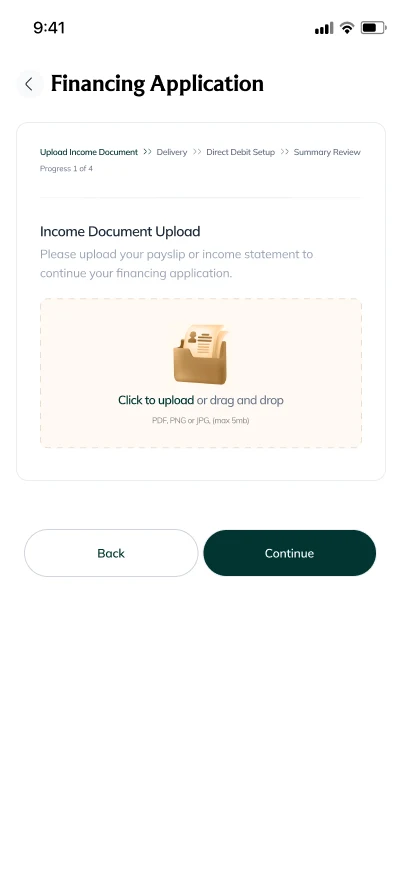
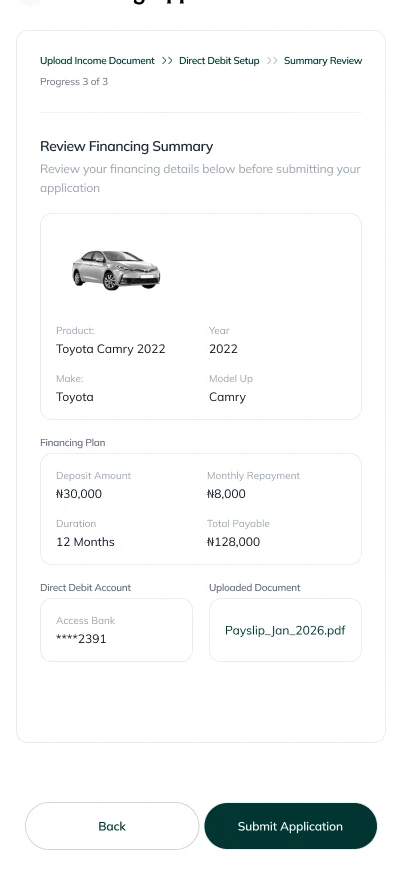
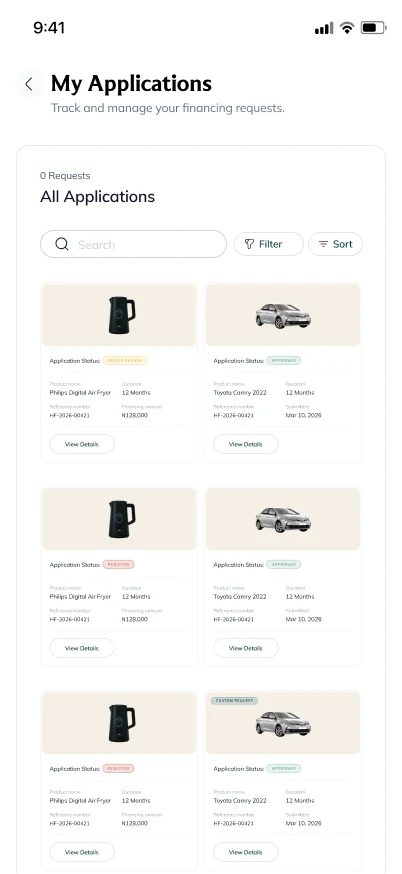
Applying is a short, guided flow: upload an income document, set up delivery, set up the direct debit, and review a summary. A step bar at the top says where you are, and each screen asks for one thing. Afterwards, My Applications and the payment schedule show what is pending and what is due.
A web app that feels like a shop
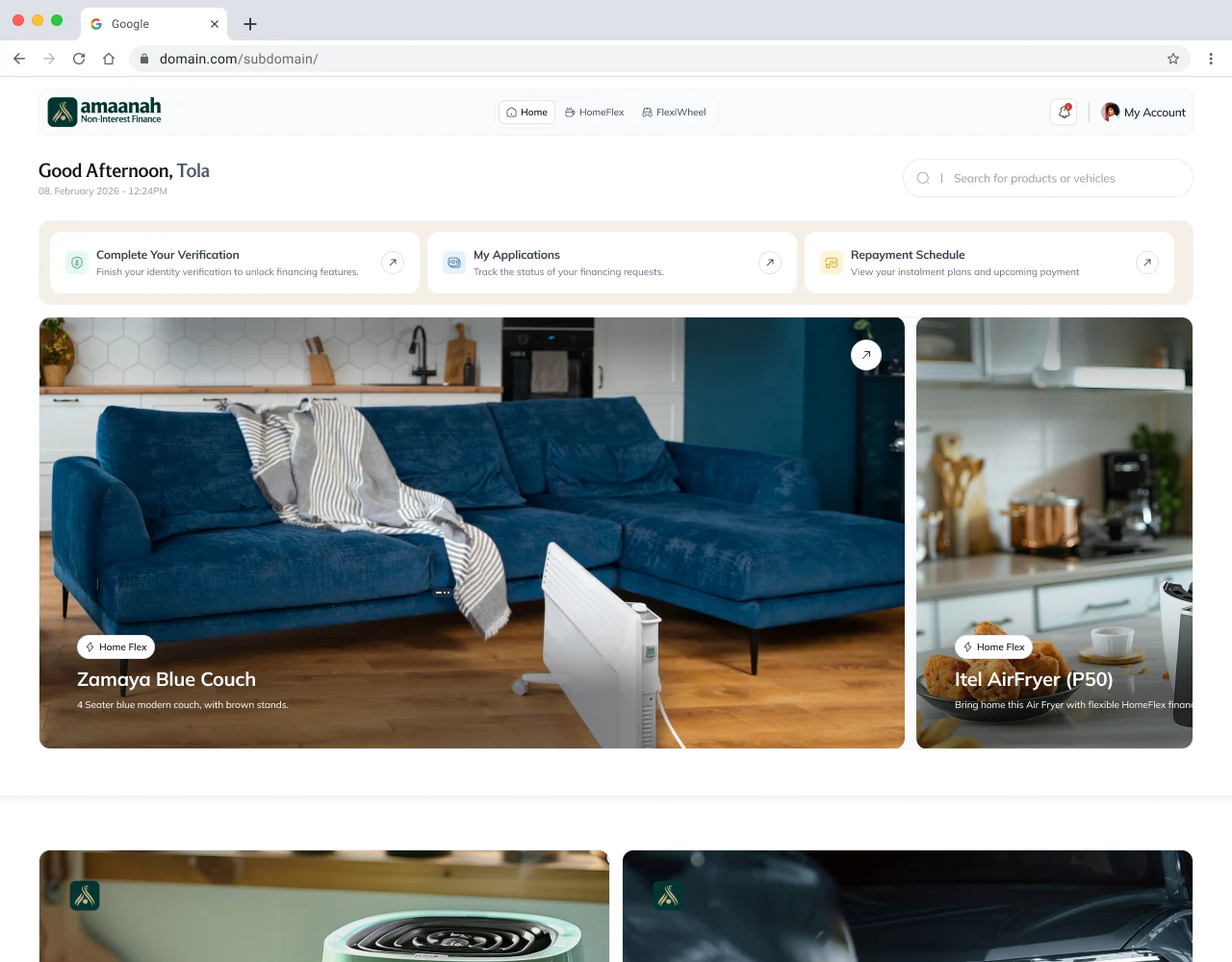
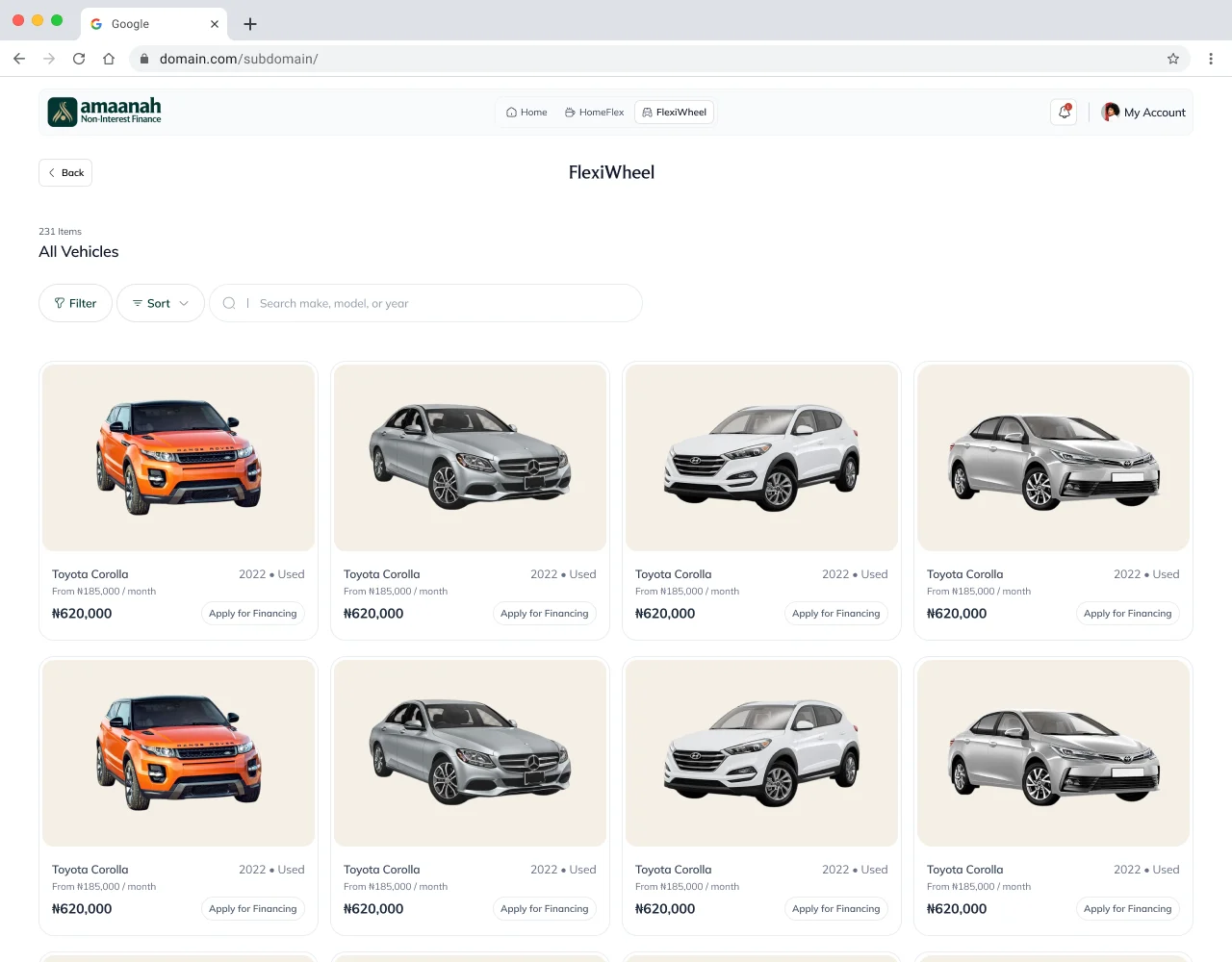
The web app greets the customer by name and puts the same three actions at the top. Below them, large pictures of featured items lead into HomeFlex and FlexiWheel, each with its own browsable catalogue.
An admin dashboard for the team that approves
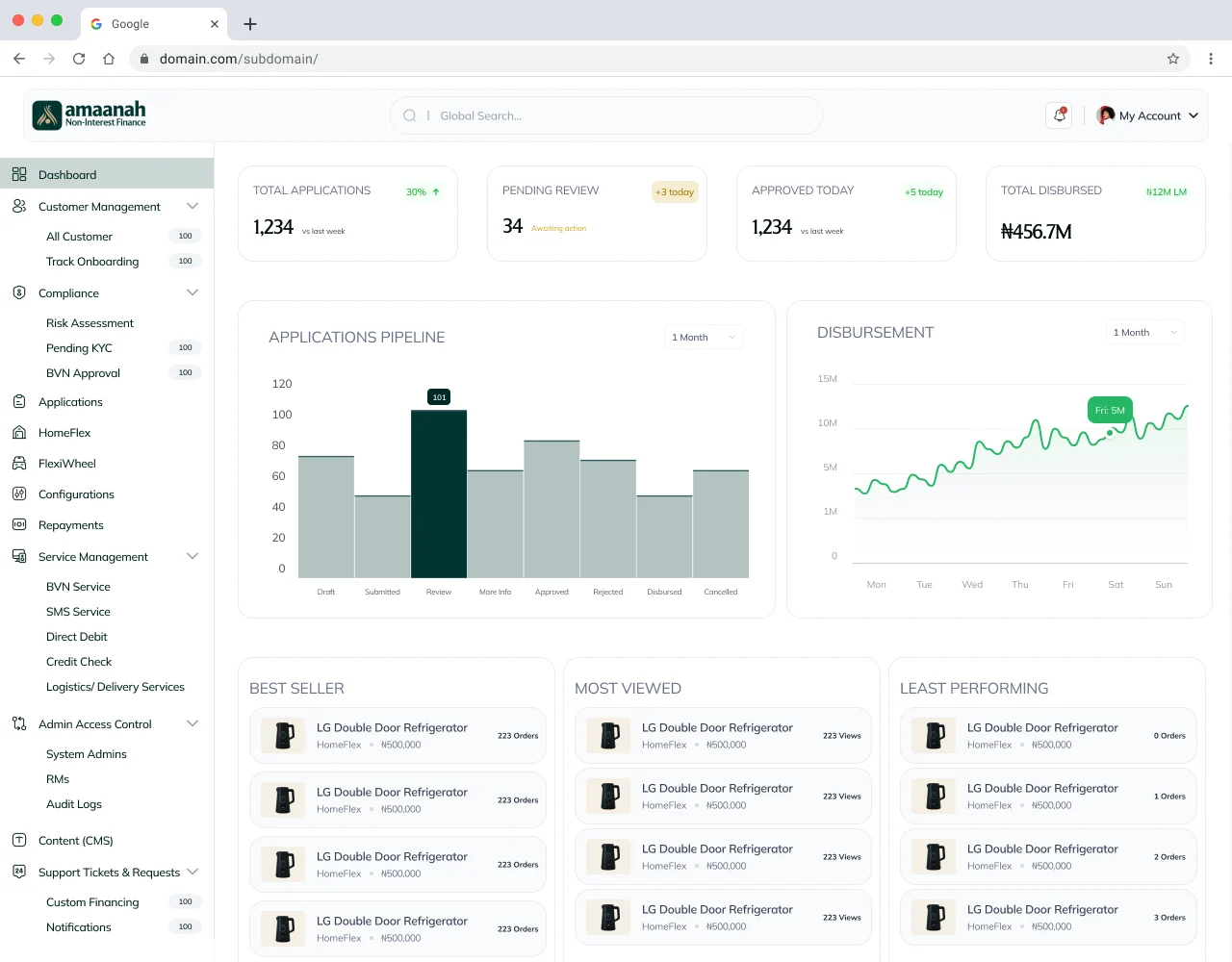
Behind the customer apps is a dashboard for the Amaanah team. The overview shows total applications, how many are waiting for review, how many were approved today and how much has been paid out, with a chart of applications at each stage and a chart of payouts over the week. Lists of best-selling, most-viewed and least-performing products help the team decide what to stock. The menu is grouped by the work: customers, compliance, applications, HomeFlex and FlexiWheel products, configuration, repayments, services, admin access, content and support tickets.
Reviewing one application
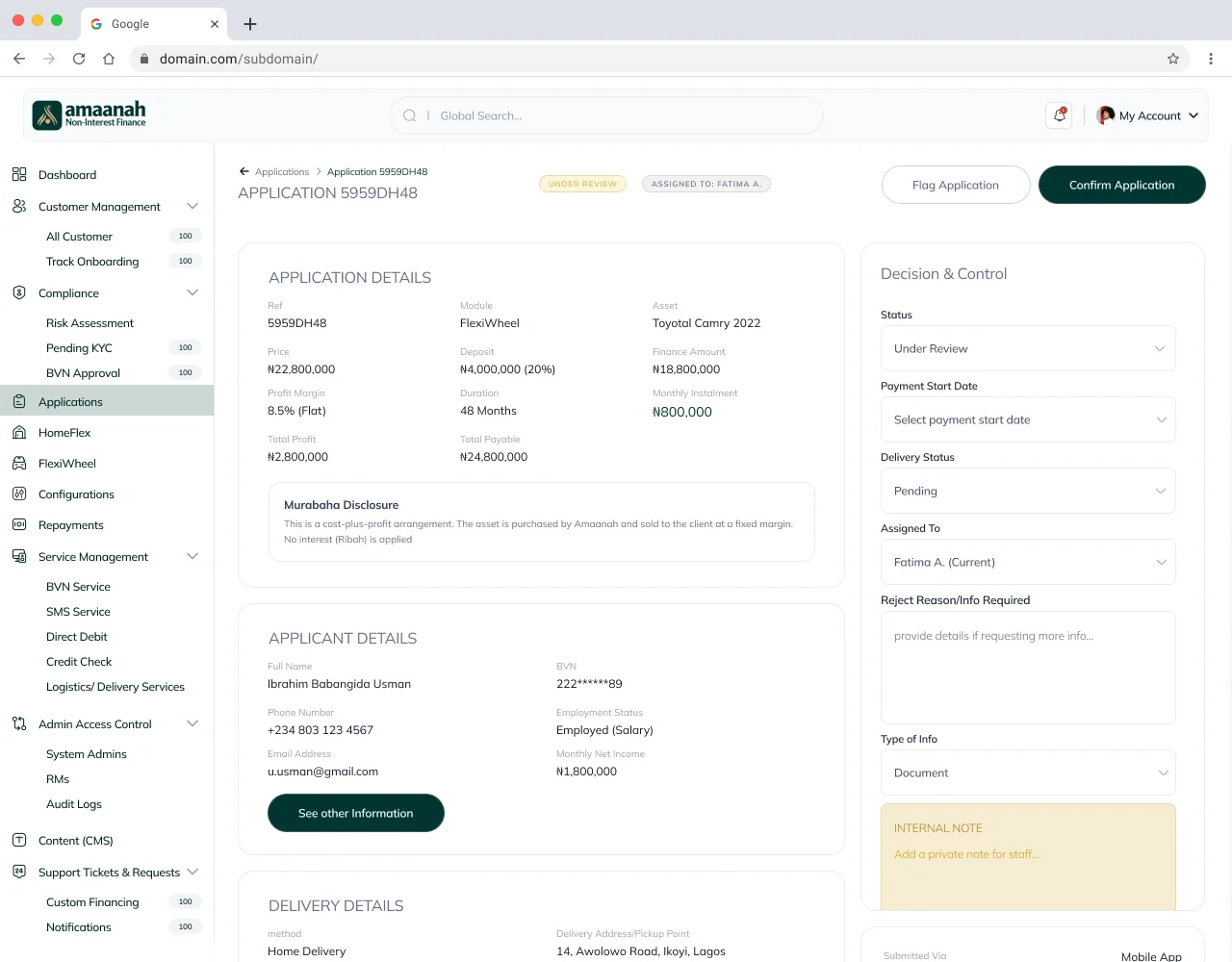
Reviewing an application is where trust is won or lost, so everything needed is on one screen. The top shows the reference, the product, the price, the deposit, the fixed profit, the length, the monthly payment and the total payable, with a plain note that the item is bought by Amaanah and sold at a fixed margin, with no interest. Below are the applicant's details and delivery information. On the right, the reviewer sets the status, assigns the case, requests more information, adds a private note, and then flags or confirms the application.
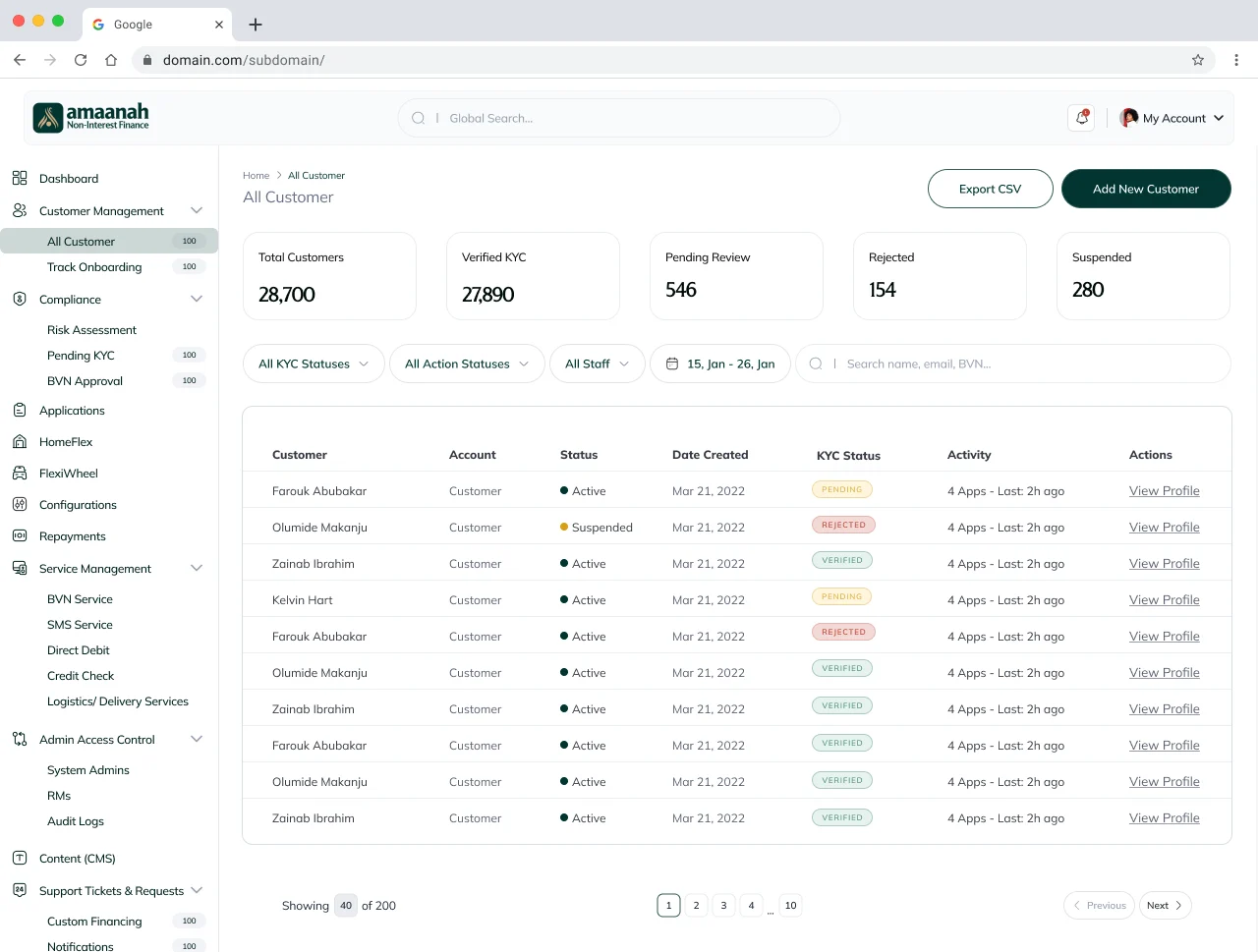
The customers page lists everyone with their verification status, so the team can see who is waiting and who needs a nudge.
outcome
The website is live at amaanahmarketplace.com, and the mobile app is on Google Play and the App Store.
lessons
Show the number before the commitment. People came for a clear price, so the monthly payment is the first thing they see, and it changes as they change the deposit and the length.
Ask for trust in steps. Splitting verification into three tiers lets a new customer begin quickly and share more only as they need to.